For the lab
From the impression to the delivery.
Cases arrive from the clinics with the shade, the scans and the prescription. They move across the board stage by stage and leave with their invoice, while each clinic watches its own cases move.
- Received
- CAD Design
- Milling / Printing
- Try-in at the clinic
- Finishing
- Quality Check
- Ready
- Delivered
01 The board
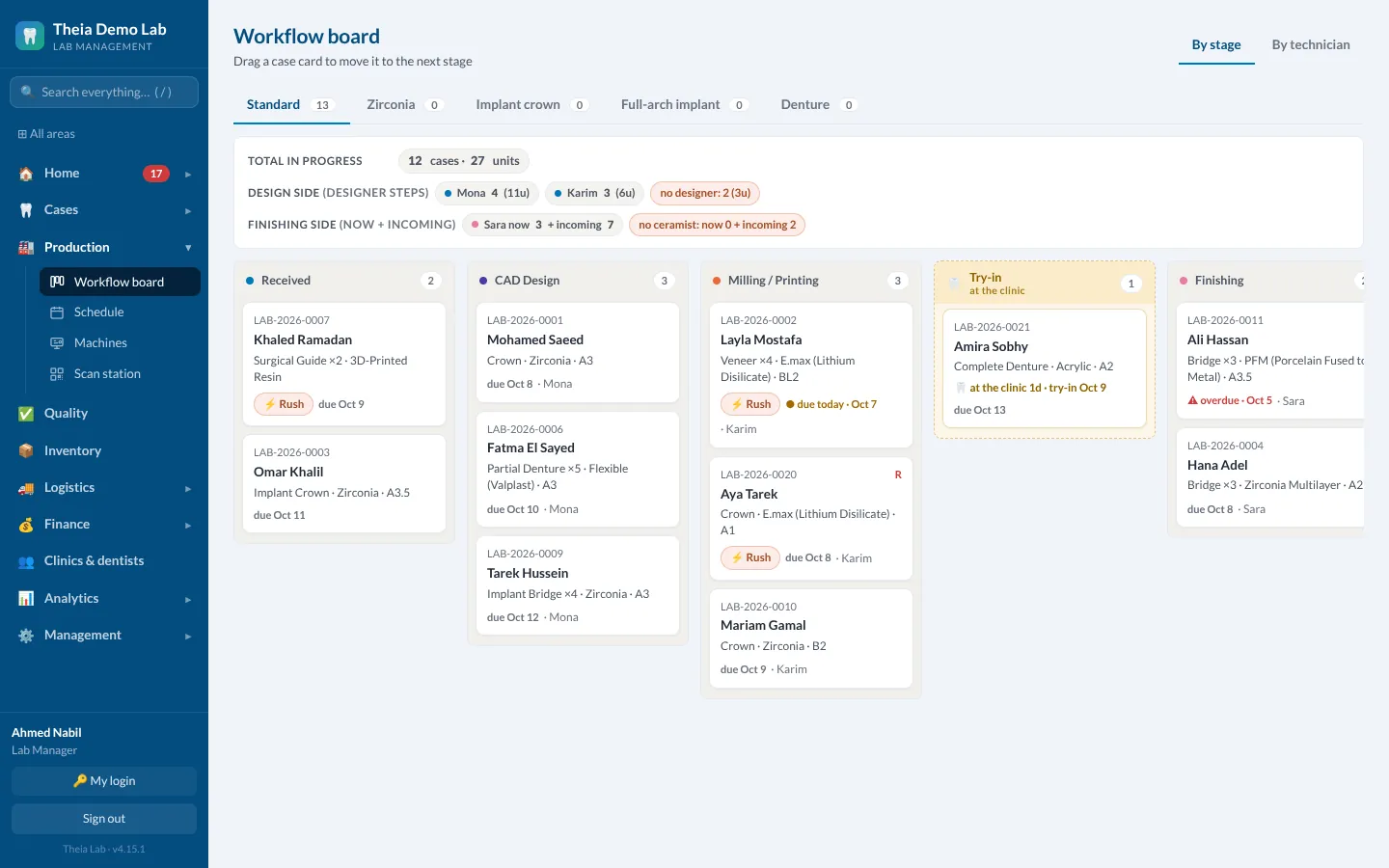
Every case in progress, by stage or by technician.
Drag a card to the next stage. Rush cases, due dates and overdue work stand out, and the top of the board says how much each designer and ceramist is carrying.
- Workflows for standard work, zirconia, implant crowns, full arches and dentures
- Your own stages, in your own order
- Cases and units counted apart: a single crown is not a 14-unit arch
- Case labels with a QR code; scan a case to move it
02 Clinics and dentists
Clinics send cases without a phone call.
A clinic that uses Theia connects to the lab once, and its staff send cases from their own login, with the patient, the restorations, the teeth, the shade, the scans, the photos and the prescription. The case appears on the lab’s board at once, and the lab’s progress shows back on the clinic’s screen.
- A portal for clinics that don’t use Theia
- A clinic with its own lab runs both from one account
- Clinics can dictate a lab order in English or Arabic
- A page per clinic: its cases, its dentists, its statement
03 Try-ins
A try-in is a step on the board, with a verdict.
When a case goes out for a try-in, the lab records what went over (wax, set-up, framework, bisque, a verification jig) and when the patient is booked. When it comes back, the dentist’s answer is recorded: approved, adjustments needed with the issues and the stage to go back to, or a remake. Every round is kept, so the second try-in reads next to the first.
Time at the clinic is counted apart from time at the bench, so a delay at the dentist’s end is not counted against the lab.
04 Quality
Checked before it leaves, and remakes explained.
Checklists at the design and after manufacturing: the right patient and tooth, margins, contacts, occlusion, minimum thickness, the fit on the model, no chips or cracks. Remakes carry their reason, so the remake rate can be read by clinic, by technician and by material.
05 Materials
Discs, blocks and boxes, counted the way you use them.
Buy by the box, use by the piece. A zirconia disc serves several crowns, so Theia keeps the open disc, how much of it is left and how many more units it should give, alongside a new disc started next to it.
- Low-stock suggestions rounded to whole boxes
- Suppliers, purchases and expiry
- Machines, with an alarm before maintenance is due
- Material cost per case
06 Deliveries
Pickups and deliveries on one schedule.
What leaves today and for which clinic, who carries it, and what comes back with them. Drivers can check out from the road.
07 Money
Invoices, statements and what each clinic owes.
Invoices per clinic, monthly statements, payments, quotations and the lab’s expenses, including the payroll from the lab’s attendance.
08 Numbers
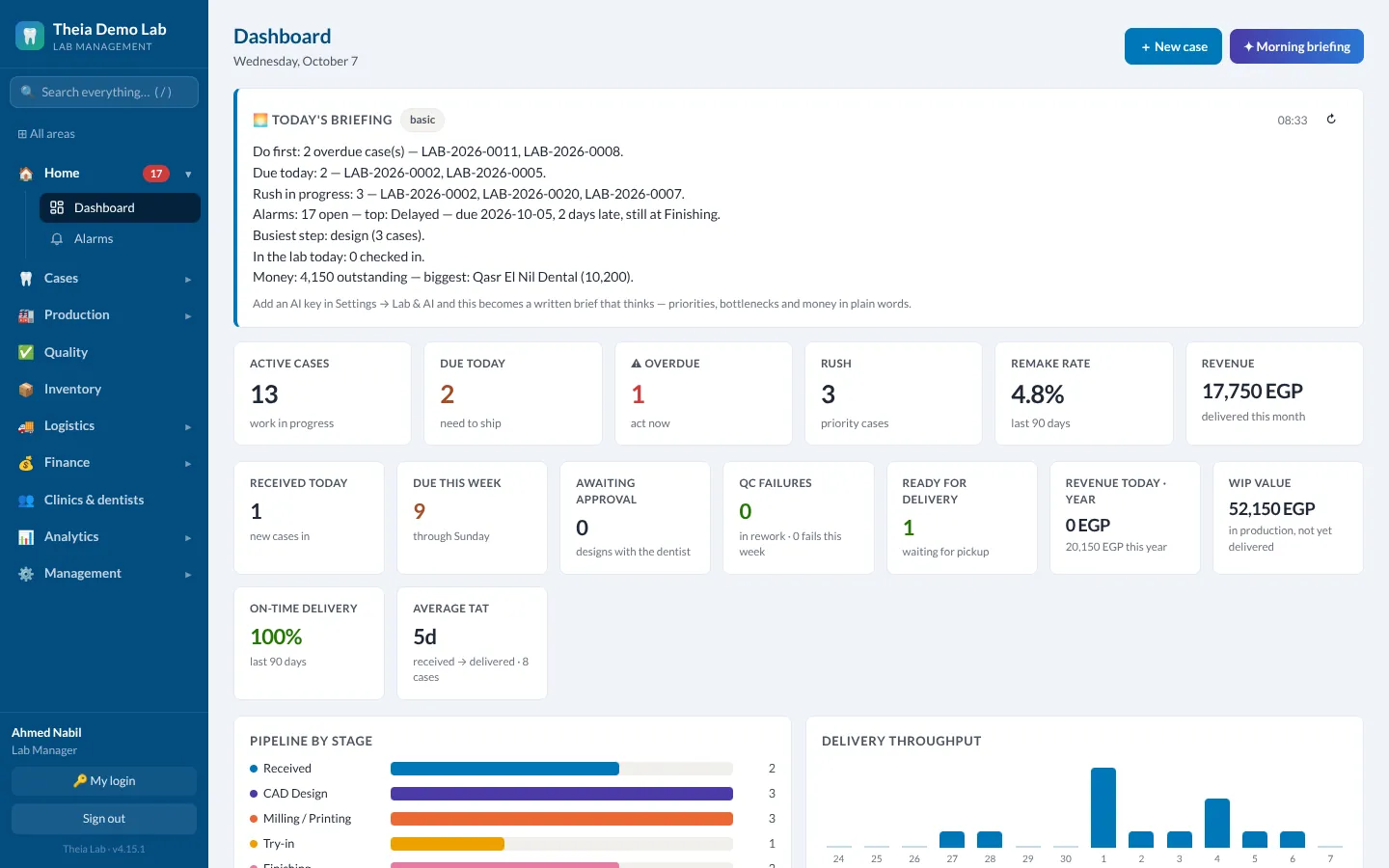
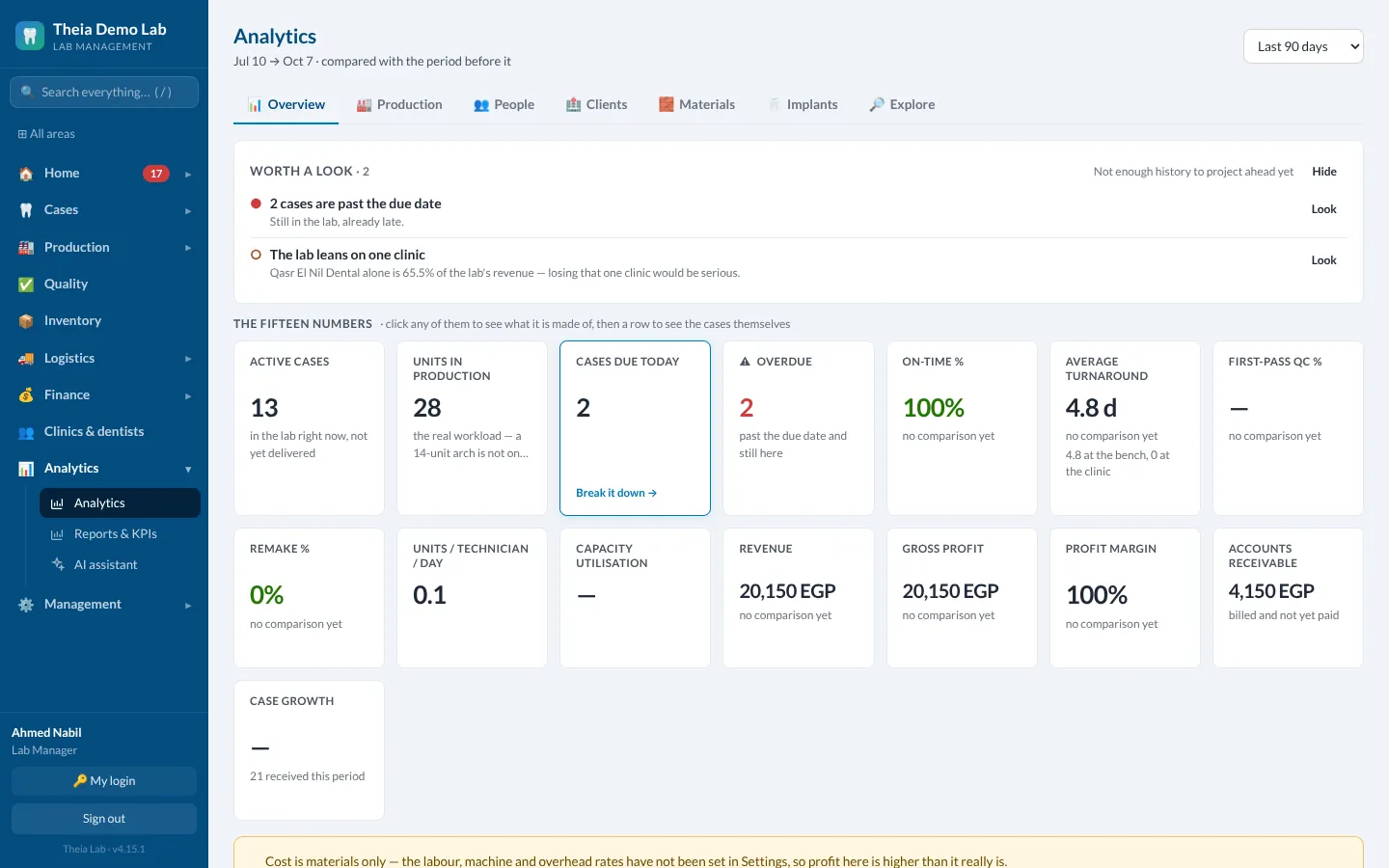
Fifteen numbers, each one you can open.
Active cases, units in production, on-time delivery, turnaround, first-pass quality, remakes, units per technician, capacity, revenue, profit and what is owed, each compared with the period before. Open any of them by clinic, product, technician, stage, material or month, down to the cases themselves.
09 The lab team
Enough technicians for what was promised today?
The lab’s attendance starts from that question: the units due against the technicians in, department by department. Check-in by fingerprint or card terminal, by QR code, from the phone, or simply by opening Theia on the lab’s network.
- Night and flexible shifts, Ramadan hours
- Planned overtime, approved up to the plan
- Productivity per technician
- Payroll with night, holiday and production pay